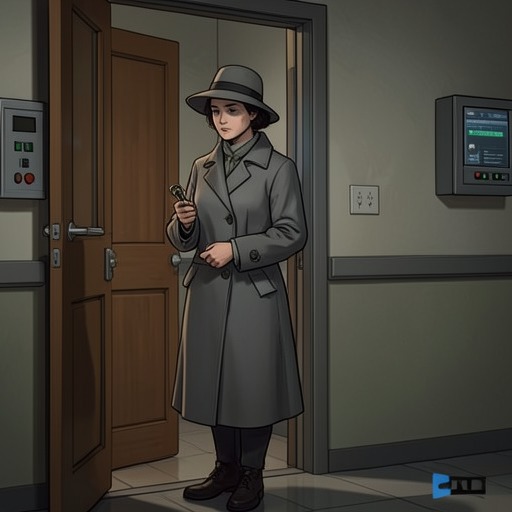
Remo
Los renglones torcidos de DiosRemo is the peaceful, solitary twin of Rómulo, a young patient at the asylum whose death exposes the lethal consequences of confusing one brother with the other. The two look so much alike that doctors and patients distinguish them chiefly by their conduct: Rómulo is restless and imitative, while Remo is quiet and keeps to himself. That difference does not save Remo when the Elephant Man mistakes him for his brother and attacks him.
Identity and Distinction
Remo and Rómulo are twin brothers whose parents were both described as intellectually disabled. Someone gave the boys the names Romulus and Remus, though the account treats the choice as an unexplained joke rather than identifying who made it. The brothers deny their kinship or pretend not to know of it. In Rómulo’s case, the denial goes further: he rejects not only their relationship but the reality of Remo’s existence, despite the other boy being close by and closely resembling him.
Their physical likeness makes behavior the ordinary means of telling them apart. Rómulo is the tireless, agile imitator, mimicking the people around him; Remo is pacific, solitary, and does not trouble anyone. The distinction is strikingly practical: the hospital community can identify the twins by their habits, but their likeness remains dangerous when someone relies on appearance alone. Remo’s quietness is not simply a contrast used to make his brother more conspicuous. It helps explain why the two brothers’ paths diverge at the moment that proves fatal.
The Twin Relationship
The twins’ shared identity is presented alongside their refusal to acknowledge it. When Alice Gould asks whether they recognize one another as brothers, the answer is no. The account leaves open whether Rómulo sincerely fails to recognize Remo’s existence or knowingly insists on denying it. The uncertainty is attached specifically to Rómulo’s state of mind; the evidence does not disclose what Remo himself believes about the denial or why he participates in it.
This mutual disavowal sits uneasily beside the visible resemblance that makes the brothers so readily confusable. They are alike enough that staff and patients need their contrasting temperaments to distinguish them, yet the brothers do not affirm the bond that their appearance seems to insist upon. The result is a relationship made legible to others through outward comparison but denied by the twins themselves. Remo’s place in the story is therefore bound to both sides of that contradiction: he is Rómulo’s near double, and also the brother whose quiet, separate presence Rómulo refuses to admit.
Death and Mistaken Identity
Remo is killed after the asylum outing when the Elephant Man encounters him beside himself and mistakes him for Rómulo. Alice’s reconstruction gives the error a concrete circumstance: on the return from the outing, Rómulo, alerted to the danger, keeps walking behind the giant. Remo, by contrast, has no reason to flee from him. The Elephant Man suddenly sees Remo nearby, confuses him with the brother he has been trying to catch, and attacks. Remo’s peacefulness does not provoke the violence; it leaves him in the wrong place when the attacker acts on a mistaken identity.
The method of the killing is brutal. Alice explains that the Elephant Man throws Remo across his back and crushes him. The later comparison with the murder of Raimundo García del Olmo’s father specifies the bodily evidence: in both deaths the victim’s chest is crushed and the internal organs ruptured. Remo’s murder is thus not an abstract accident of resemblance but a physical killing whose particular injuries can be compared with another victim’s wounds.
Discovery and Narrative Significance
Remo’s death becomes public knowledge during the investigation, when Alice insists to the commissioner that the young man is dead. Her declaration shocks those present. Montserrat Castell is especially taken aback: she had been Alice’s friend, but had not known that Remo had died and cannot confirm Alice’s account. The moment makes clear that the twins’ familiar presence in the asylum has not made Remo’s fate generally known. Alice’s certainty arrives before the others can reconcile it with what they thought they knew.
Later, Alice connects Remo’s killing to the murder of Raimundo García del Olmo’s father. She has examined a relevant hospital record and concludes that the older man was not killed by blows from a sandbag, as had been supposed, but in the same manner as Remo. The record shows that the Elephant Man had been admitted to the hospital at his uncle Severiano García del Olmo’s request and, under the open regime, was allowed to leave for three days; the second day coincided with the uncle’s murder. Alice interprets the matching injuries and the timing of that outing as evidence linking the two deaths.
Remo’s brief characterization is built around a quietness that sharply contrasts with Rómulo’s mimicry and agitation. His death turns that contrast into a plot mechanism: a killer pursuing one twin encounters the other, and resemblance converts an otherwise solitary patient into a mistaken target. The later comparison of the two victims’ injuries makes Remo’s death crucial to Alice’s deduction, transforming a concealed killing within the asylum into evidence that helps identify a connection between the hospital and an earlier murder.